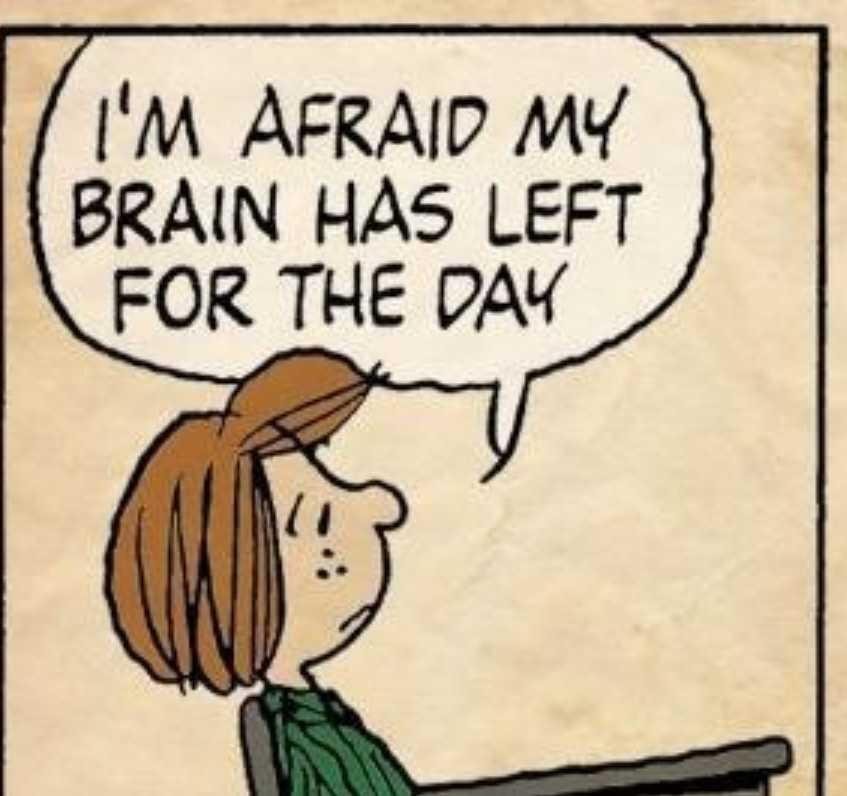
 Your vocabulary mirrors your clarity. The opposite of clarity is unclear or foggy. (Brain fog?)
In terms of consciousness, understanding is the lowest level, while confusion is a higher level…
Most people think they understand, they know, while they have no clue… And they speak from their understanding. This is the reason for the low truth value of people’s stuff, including books, teachings, etc.
I pretty much keep away from understanding. Understanding is a mind-thing… a Plato’s Cave thing.
Nothing can be truly understood for it to remain both real and true.
Understanding simplifies the world to the level where understanding is… not the world… it is a mind-construct. If you didn’t understand this, I am happy.
One of the Starting Point Measurements is your vocabulary/clarity measure.
 Wittgenstein, 20th century philosopher, (personal vibration: 200. Never penetrated the invisible, in fact never gave a fig about it. His concept of language is very limited, but regardless, this first quote has high truth value: 60%, while the second, the way HE meant it, has only 10% truth value. The way I mean it: 70% truth value. Interesting.) famously said: “The limits of my language mean the limits of my world.” and “Whereof one cannot speak, thereof one must be silent”
Of course he said that because it needed to be said. You cannot tell the size of your knowledge, the size of your world. It is a paradigm… the boundaries are one-way mirrors. you can only see it from the other side.
My hunch is, you cannot even get what I am talking about when I say one-way mirror… you have to have a vibration of at least 200. Why do I think that? Because in all my readings, I have only read it in one author’s book: Tim Tigner’s books. In all of three of them that I have read.
And, of course, whatever is outside of your world is something you cannot speak of… So what are the things that are outside of your world… Hey, most of the things that you came to my site for.
I used to have a saying about coaches, that they are like surgeons who didn’t wash their hands before surgery. They haven’t given respect to the person or people they talk to… and they talk, and suggest, and advise. I have not met a coach who is not like that.
And I also haven’t met a person, for example, who knew deeply the meaning of gratitude and appreciation. Or spirituality. Or beingness. Or any of the things I am talking about.
When you repeat something you learned from someone else, you say things that are Tree of Knowledge. And what you are talking about is “Whereof one cannot speak, thereof one must be silent“… But I am yet to meet a person who has respect enough to shut the fig up.
OK, rant over. Keep reading.
People are stunned by their low numbers. They shouldn’t be. Their results in life, in all four main areas of life are consistent with their clarity. Low.
As I am looking for illustration, I am encountering something strange. Vocabulary measuring tests do not test clarity.
You may be a writer, a teacher, a lawyer… and have many words. You only use a few, and you have an approximate knowledge of their meaning matching the level of your consciousness.
So even though we seemingly measure the same thing, we are measuring the size of your world. Everybody seems to know the meaning of appreciation (gushing, saying “I appreciate you!” blah blah blah) but I am yet to find a person who actually appreciates…
Appreciating supposes that you see value… but you don’t. Value has been one of the hardest concepts to teach because people cannot see value. Can’t see it. So they cannot appreciate.
Yet I found hundreds of memes saying “expect nothing, appreciate everything”… the truth about you is: you expect everything (inside your world) and appreciate nothing. Can’t. It’s not that you are a bad person. Your vibration is low. Sorry to break it to you…
When you are not clear, it is like you are bringing a knife to a gun fight. It is like you use tools that are unsuited for the job. It is like you are fighting windmills. It is the state of “for you everything is the same as everything else, except that not always.”
Clarity has power. And clarity is lacking everywhere. Imagine being represented by a lawyer whose clarity number is 1%. You can bet on losing, unless the clarity of the judge and the other lawyers’ is lower.
You read approximately and you listen approximately. You hear on the level of your vocabulary, you think with what you got: which is not much. 🙁
You need to increase your vocabulary, you need to increase your clarity, you need to increase the size of your world.
I have been working on distinguishing for myself how to do that enlarge my world. So I experiment on myself and then teach others to do the same.
I now have two students who are getting brilliant through the practices.
I got up today with some “meh”, but then I thought that if I made a difference with just two people, then I didn’t live in vain… And it got brighter, and I got a smile on my lips and a spring in my steps.
 Reading (listening is the same as reading! I’ll explain later) for understanding, or reading for any agenda, even in order to learn something, or to dig for gold, will result in approximate reading. A narrow opening into the mind will not let the whole reading to go through, only your in-order-to part.
And this is how you are reading, this is how you are listening. Through an in-order-to.
You may have many. Here are a few in-order-to’s:
- I want to be right
- I want to understand
- Oho, I need to understand
- I should understand
- I want to look good
- this is homework. my job is to get to the other side, to get it done
- I already know
- I’ll prove you wrong!
There are more, these are just the most frequent agendas in my practice…
Yesterday I had a phone call where I had to stop about 10 times because what I was saying didn’t go through. I didn’t know what was going on on the other end, so I asked.
The other person was thinking about what I said, trying it on.
His agenda rendered him a non-listener.
When you read, when you listen, you spend most of your time not reading, not listening, but doing actions in your head that you think serve your agenda: understanding, getting your money’s worth, learning, whatever your agenda.
Result: you never learn. You never understand. You never get clearer: you remain the same. Reading/listening doesn’t make a difference for you.
So how do I listen? I listen/read the way I shower.
I let the water come and enjoy it. When I notice that I am taking my attention to any place other than the listening or the reading, I stop reading, and gently return my attention. Or if I am listening, I turn off the audio. Or if I am in the middle of a conversation, I stop the speaker for a moment or two, so I can return to hearing what they are saying.
I have been practicing this for 60 years. Stopping the inner chatter and return to the activity at hand.
At some points removing the agenda is difficult, but necessary.
I have a few advanced degrees, so I have had a lot of books to read for exams. And I had only a few days to read them.
It takes more energy, more discipline, to let go of the agenda of learning for the exam, the agenda to read in order to be able to pass.
The two subjects where I failed to get rid of the agenda: I failed the exam at both. So the retake: I put more energy into considering it a shower than before, and of course I passed both exams.
And then there was a third subject where my bs meter was so triggered, I could not pass the test, not even the third time. This is why I have an incomplete MBA: one credit short.
Even if there is just one filter through which you listen through: I agree/I don’t agree, true/false, good writing/poor writing… you’ll get nothing from your reading and listening, and you wasted your time.
Today my training allows me to read as low as 7% truth value books, and not argue with the book… so I can get all the value, all the words, all what it’s trying to say, and maybe even enjoy it.
Lower than 7%? It means misleading, b.s., wrong premises… I can’t. Too low vibration to mix it with my own energies.
The practice of A is A is what I am talking about. But I am learning that what remains A for me when I read, doesn’t remain A for you: you cannot even hear it. The book says A, you hear A means this and this, and then you say: A means this and this… I won’t fight A, I refrain from fixing it.
You didn’t hear A. And you never noticed that you end up with “not A”. And you remain the same. Foggy, ineffective in life, and powerless to make something of yourself. Powerless to become worth a damn. Powerless to deserve the good life.
Bummer, eh?
Here is what Roy H. Williams has to say about it. He uses the words “Christian” and “Samaritan”, because these words are the closest to his heart.
I could use spiritual, appreciative, value, because these are closest to my heart.
Let me know what you get… Allow the words shower on you, allow yourself to get wet.
Who is Your “Samaritan”?
A lawyer and a rabbi are arguing about what it means to be kind.
It is an ancient argument.
The lawyer thinks a “kind” person is always polite and considerate.
The rabbi thinks “politeness” is superficial, and “considerate” simply means to consider the consequences before taking any action, but that true kindness comes at a price. The rabbi believes that true kindness will take insult, inconvenience or injury upon itself in order to save another person from the same.
We read of this encounter between the lawyer and the rabbi in the Biblical book of Luke. You may remember the story of a traveler who is robbed, stripped of his clothing, beaten, and left half dead alongside the road.
Jesus, the young rabbi, tells the lawyer that two religious people passed by the wounded traveler, but both of them avoided the man. Then, the member of an ethnic minority came upon the injured traveler. The most common name for this ethnic minority was a racial slur in the day of Jesus, so to help make his point, Jesus used the racial slur as the name of the man: “a Samaritan.”
According to Jesus, “the Samaritan,” at his own expense, took the injured traveler to an inn, treated his wounds, and paid the innkeeper to take care of him.
Jesus then asked, Which of these three do you think was a neighbor to the man who fell into the hands of robbers?
The lawyer, too polite to say “Samaritan,” said, The one who had mercy on him.
Jesus said, “Go and do likewise.”
Rabbi Jesus was clearly demonstrating that kindness costs the giver, and that it is our actions that define us, not our origins.
Disagreements occur when there is a lack of definition of terms. When there is no agreed-upon definition of a word, arguments will revolve around it.
I believe the word that has the largest number of conflicting definitions today is the word “Christian.”
If we were to poll our nation, we would doubtless discover countless definitions for “Christian,” but I believe most of them would fall somewhere in the middle of a three-cornered continuum.
At one extreme of that triangle, a Christian is a believer in Christianity, a religion founded by Jesus, who came to give us a new moral code and teach us a better way to live. This Christian is patriotic and rejects behaviors that he or she believes to be immoral.
At the second extreme of that triangle, a Christian is a believer in Jesus as God Incarnate, who came to earth to purchase eternal life for all who would believe. This Christian does not believe that Jesus came to deliver a new moral code, but to die so that we might live.
The third extreme of our triangle is a definition occasionally embraced by people who do not identify themselves as “Christian,” because they define a Christian as:
- a religious person who believes poor people deserve to be poor because “anyone can pull themselves up by their bootstraps through good decisions and hard work.”
- a religious person who is in favor of guns, but against gays.
- a religious person who believes Americans are exceptional, and that all other nations are inferior.
It is not my purpose today to start an argument, but to defuse one.
Christianity and politics are in turmoil today due to the lack of an agreed-upon definition of the word, “Christian.” I have no intention of offering my own definition of Christian, since it is unimportant to anyone but me. And I do not expect your definition of “Christian” to be any of the three extremes I named. I expect you have a complex, nuanced definition that you feel strongly about. You may even be anxious to share it in the hopes of “clearing the air.”
Please don’t.
My only goal today is to ask you to consider “for just a moment“
that a good person might hold views and opinions dramatically different from your own without becoming “the enemy.”
This person could even become your trusted friend.
Even if they are “a Samaritan.”
Roy H. Williams
Question: can you get rid of the brain fog through learning to read/listen the way I teach you?
My answer is: yes. Because once you can hear what is being said, once you increase your clarity, you’ll see all the steps you can take to remove what is obviously outside of the “strait and narrow” path to get yourself well.
Would I recommend that you do this before you do your water, and your food, and your supplements, etc?
No, I would not. I would start with your physical well-being. But I would also start getting into the habit of reading. Because just like running a marathon, you cannot start training when you need to run it, you would slowly increase your capacity to run, and run well.
So there you have it. You all have brain fog to one degree or another.
I do… In spite of all the efforts.
There is always more West to go my friend.

 I have written a bunch of articles about deserving. For several reasons, the most important is this: deserving is a tricky word… Is it a beingness verb, maybe adjective or is it a true verb, doingness? I hope I can hold your attention through a few articles exploring this ever so important word… Once you get it, you’ll know what to do. Because you cannot get what you want without deserving it… And if you do get what you want without deserving, what you wanted will kill you… Sounds like a puzzle… it’s a principle.